
Every heir who inherits a dusty leather-bound binder from an attic, every investor looking to diversify into tangible historical assets, and every lifelong collector studying auction records asks the exact same high-stakes question: what truly defines the most valuable old stamp collection, and how do you distinguish genuine museum-grade wealth from childhood scrapbooks? The romantic folklore of philately suggests that any envelope tucked away in a 19th-century roll-top desk holds a fortune. The reality of the modern commercial market is far more ruthless. Over ninety-nine percent of vintage stamps produced after the introduction of mass mechanical printing in the 1930s were saved in quantities of tens of millions; today, they trade as bulk discount postage rather than blue-chip assets. A collection does not derive value from age alone or sheer quantity. The most valuable old stamp collection portfolios in global history—such as the legendary holdings of Count Philipp von Ferrary, William H. Gross, or the Royal Philatelic Collection—were built on ruthless criteria: extreme postal scarcity, printer plate misprints, postal administration errors, intact original gum, and ironclad provenance. As philatelic market analysts and commercial postage distributors who examine printing dies, audit Scott catalogue realizations, and process thousands of postal lots daily at Stamp Supply LLC, we cut through the amateur myths. Here is our practitioner-level breakdown of the world's most legendary historical holdings and the 20+ cornerstone rarities that define the most valuable old stamp collection assets on Earth.

Quick Answer: What Anchors the Most Valuable Old Stamp Collection?
The most valuable old stamp collection holdings in philatelic history are defined by extreme surviving scarcity, error printing states, and intact provenance. Rather than bulk volume, multi-million-dollar collections are anchored by iconic world-record single items: the unique 1856 British Guiana 1c Magenta ($8.3 million realization), the 1855 Swedish Treskilling Yellow ($2.3+ million), the 1918 US 24c Inverted Jenny (a single position realized over $2.0 million), and the elusive 1868 US 1c Z-Grill. In historical collections, pedigree reigns supreme: holdings such as the Ferrary Collection, the Burrus Collection, and the legendary William H. Gross US collection achieved historic valuations because every item possessed certified condition grades, intact postal covers, and expert authentication from authoritative bodies like the Philatelic Foundation or the Royal Philatelic Society London. If you hold an inherited collection, value is concentrated in pre-1900 classical issues, errors, and intact postal history—not common mid-century commemorative sheets.
Article Directory
- The Anatomy of Philatelic Value: Scarcity, Condition & Provenance
- Quick Summary Table: The 20+ World-Record Stamp Rarities
- The 20+ Cornerstone Rarities That Anchor the World's Most Valuable Collections
- The Legendary Assemblies: Ferrary, Gross, and the Royal Philatelic Collection
- Commercial Postage Spotlight: Stamp Supply LLC Mailing Solutions
- Direct Technical Comparison: Blue-Chip Rarities vs. Heirloom Collections vs. Modern Postage
- Pros and Cons Table: Investing in Rare Antique Stamps
- Commercial Realities: Tangible Wealth Preservation vs. Illiquidity
- Who Needs a Professional Appraisal vs. Who Has Usable Postage
- Costly Mistakes That Destroy the Value of an Old Stamp Collection
- Essential Sourcing & Vetting Checklist: Certificates, Expertization & Catalogues
- Expert Philatelic Practitioner's Final Valuation Verdict
- Frequently Asked Questions
- Authoritative Philatelic References & Archival Standards
The Anatomy of Philatelic Value: Scarcity, Condition & Provenance
To understand what elevates an ordinary accumulation into the most valuable old stamp collection in the room, one must master the unyielding laws of philatelic appraisal. The non-collector assumes that older automatically equals more expensive. In our testing across estate liquidations, this assumption is dismantled daily. A common British Penny Red from 1858 can be purchased for less than five dollars because billions were printed. Conversely, a 20th-century misprint like the 1918 Inverted Jenny commands seven figures because a single post office pane of one hundred copies slipped past inspectors.
Commercial value is governed by three primary pillars:
- Absolute and Relative Scarcity: True value requires an imbalance between known surviving copies and collector demand. A unique stamp, such as the British Guiana 1c Magenta, has an absolute scarcity of one. However, relative scarcity also drives value: while several thousand copies of the 1840 British Penny Black survive, finding an uncancelled, pristine mint example with wide sheet margins and original gum is an extraordinary scarcity that multiplies its market value a hundredfold.
- Physical Condition and Centering Grades: Modern philately is an obsession of millimeters and microscopic paper fibers. Numerical condition grading (from Poor/Fair up to Superb 98 and Gem 100) dictates pricing. A stamp with mathematical, laser-balanced margins around its vignette, rich unoxidized chemical pigment, uncreased woven paper, and original, unhinged gum (Mint Never Hinged, or MNH) will command twenty times the Scott Catalogue baseline price compared to a copy with off-center perforations cutting into the design or a thinned paper back.
- Pedigree and Documented Provenance: The most valuable old stamp collection portfolios are documented like Renaissance masterworks. A stamp that passed through the auction catalogs of Count Ferrary in the 1920s, John R. Boker, or Robert Siegel Galleries carries an unimpeachable pedigree. Provenance eliminates the terror of skilled counterfeiting, chemical cleaning, re-perforation, and artificial regumming that plagues uncertified high-value classical stamps.
In most professional situations, building or liquidating the most valuable old stamp collection requires looking past emotional family stories and verifying physical paper integrity beneath high-magnification optical microscopes and short-wave ultraviolet light.
Quick Summary Table: The 20+ World-Record Stamp Rarities
| Rarity Name & Origin | Year Issued | Known Surviving Copies | Peak Realized Auction Value | Defining Philatelic Characteristic |
|---|---|---|---|---|
| 1. British Guiana 1c Magenta | 1856 | 1 unique copy | $8,307,000 | Emergency postmaster provision; unique in the world |
| 2. US 1c Z-Grill (Scott #85A) | 1868 | 2 known copies | $4,366,000 | Distinctive point-down Z-embossing waffle pattern |
| 3. Inverted Jenny Plate Block of 4 | 1918 | 1 unique block | $4,860,000 | Famous Curtiss JN-4 biplane inverted center error |
| 4. Inverted Jenny Single (Pos. 49) | 1918 | 100 total issued | $2,006,000 | Highest-graded single copy (Mint Gem 95) |
| 5. Swedish Treskilling Yellow | 1855 | 1 unique copy | $2,300,000+ | 3 Skilling printed in 8 Skilling yellow color error |
| 6. Mauritius 1d Red & 2d Blue "Post Office" | 1847 | 27 copies total | $4,000,000+ (Ball Cover) | Engraved "Post Office" instead of "Post Paid" |
| 7. Baden 9 Kreuzer Error | 1851 | 4 known copies | $1,500,000+ | Printed on green paper intended for 6 Kreuzer |
| 8. Inverted Dendermonde | 1920 | 17 known copies | $150,000 – $200,000 | Belgium Town Hall inverted centerpiece |
| 9. Hawaiian Missionaries (2-cent) | 1851 | 15 copies total | $600,000 – $2,200,000 | Pelure paper; used by early Pacific missionaries |
| 10. Basel Dove | 1845 | Limited early run | $20,000 – $50,000+ | World's first tri-color embossed stamp |
| 11. Penny Black (Plate 11 / VR) | 1840 | Plates vary; VR rare | $10,000 – $350,000+ | World's first adhesive postage; VR official issue |
| 12. Two Penny Blue (Block of 4) | 1840 | Scarce in multiples | $50,000 – $200,000+ | Original double-rate companion to Penny Black |
| 13. US 1847 First Issue (Franklin/Washington) | 1847 | Varies by grade | $5,000 – $150,000+ | America's first federally issued postage stamps |
| 14. Canada 12d Black | 1851 | ~130-145 copies | $300,000 – $500,000 | Laid paper depicting young Queen Victoria |
| 15. Western Australia Inverted Swan | 1855 | 14-15 copies | $150,000 – $300,000 | Frame inverted during two-stage lithography |
| 16. Sicilian Error of Color | 1859 | 2 known copies | $2,600,000+ | 1/2 Grano printed in blue instead of orange |
| 17. Red Revenue "Small One Dollar" | 1897 | 32 known copies | $800,000 – $1,200,000 | Qing Dynasty customs revenue surcharged for postal use |
| 18. The Whole Country is Red | 1968 | Under 50 copies | $400,000 – $1,150,000 | Chinese Cultural Revolution map error withdrawn in 1 day |
| 19. Penny Red Plate 77 | 1863 | 9 known copies | $650,000 – $900,000 | Defective printing plate rejected by authorities |
| 20. Buenos Aires "Barquitos" Error | 1858 | 1 unique tete-beche pair | $575,000+ | Inverted steamship cliché inside plate |
| 21. Tiflis City Post Stamp | 1857 | 5 known copies | $700,000+ | Russian Empire / Georgia embossed provisional |
| 22. Alexandria "Blue Boy" Provisional | 1846 | 1 unique copy on cover | $1,180,000 | Pre-federal Postmaster issue on blue paper |
The 20+ Cornerstone Rarities That Anchor the World's Most Valuable Collections
1. British Guiana 1c Magenta (1856): The Mona Lisa of Philately

The crown jewel of any discussion surrounding the most valuable old stamp collection is the 1856 British Guiana 1-cent Magenta. In 1856, a delayed shipment of postage stamps from London forced the postmaster of Georgetown, British Guiana, to commission a local newspaper printer (the Royal Gazette) to strike an emergency run. Printed with black ink on cheap magenta-colored paper, postmaster E.T. Dalton feared forgery and ordered post office clerks to initial each stamp before sale. A single copy survived, bearing clerk E.D. Wight's initials. Rediscovered by a 12-year-old Scottish schoolboy in 1873, it has crossed the auction block at record prices, realizing $8.3 million at Sotheby's in 2021.
2. The United States 1c "Z-Grill" (1868 - Scott #85A)
In the post-Civil War era, the United States Post Office was paranoid about citizens washing cancellation ink off stamps to reuse them. To prevent this, the National Bank Note Company patented "grills"—geometric steel dies that embossed tiny waffle patterns into the stamp paper to break the fibers and allow cancellation ink to soak deep into the paper. The "Z-Grill" is distinguished by tiny horizontal ridge indentations. Only two copies of the 1-cent blue Benjamin Franklin with a certified Z-Grill are known to exist: one is permanently held by the New York Public Library, and the other made history when it was traded for an Inverted Jenny block by billionaire investor Bill Gross.
3. The 1918 24c Inverted Jenny (Scott #C3a)

America's most celebrated misprint occurred on the morning of May 14, 1918, during the launch of US airmail service. A collector named William T. Robey walked into a Washington, D.C. post office and purchased a full 100-stamp sheet of the new 24-cent bi-color stamp depicting the Curtiss JN-4 "Jenny" biplane. Because the red frame and blue airplane vignette were printed in two separate passes, the sheet passed through the press upside down. Robey recognized the error immediately. The sheet was sold to dealer Eugene Klein and subsequently broken into blocks and singles. In 2023, Position 49 (graded Mint Gem 95) realized over $2.0 million at Robert A. Siegel Auction Galleries, cementing its status as an essential anchor in the most valuable old stamp collection portfolios.
4. The Swedish Treskilling Yellow (1855)
In Sweden's 1855 first postage issue, the 3-skilling banco stamp was intended to be printed in blue-green, while the 8-skilling stamp was printed in yellowish-orange. Due to an accidental cliché substitution in the printing press, at least one sheet of 3-skilling stamps was printed using yellow ink. A single, authenticated copy survived, discovered by a young schoolboy named Georg Wilhelm Backman in 1886. It has traded hands privately and at auction for millions of dollars, remaining one of Europe's premier unique rarities.
5. The Mauritius 1847 "Post Office" Issues (1d Red & 2d Blue)

The island of Mauritius, a British crown colony in the Indian Ocean, was the first British territory outside the British Isles to issue adhesive postage stamps. Engraved locally by Joseph Osmond Barnard, the stamps erroneously bore the words "Post Office" along the left margin instead of the standard "Post Paid." Only 500 copies of each denomination were struck, many used by Lady Gomm, the Governor's wife, to mail invitations to a society ball. Today, fewer than 30 copies exist across both denominations. The famous "Ball Cover" bearing both the 1d and 2d issues realized over four million dollars, representing an undisputed trophy in classical philately.
6. The Baden 9 Kreuzer Error (1851)
In the first stamp issue of the Grand Duchy of Baden, the 9-kreuzer value was designated for rose-colored paper, while the 6-kreuzer value was printed on green paper. A printer inverted the numeral plate or mistakenly grabbed a sheet of green paper for the 9-kreuzer run. Only four copies are verified to exist, all bearing postmarks. This printing error is the rarest and most expensive gem in classic German States philately.
7. The Inverted Dendermonde (1920 Belgium)
Depicting the historic Town Hall of Dendermonde, Belgium's iconic 1920 65-centime bi-color issue suffered a dramatic inversion error during its two-stage printing run. The central architectural vignette appears inverted inside the decorative frame. Only seventeen copies are known to exist across the globe, with two copies famously disappearing during an armed robbery in the 1940s.
8. The Hawaiian Missionaries (1851 2-Cent, 5-Cent, 13-Cent)
Before Hawaii became a US territory, the Kingdom of Hawaii established its own postal service. Printed on fragile, translucent pelure paper at the government printing office in Honolulu, these crude typographic stamps were predominantly used by American Christian missionaries writing back to New England. The 2-cent denomination, used primarily on newspapers, is exceptionally rare: only fifteen copies survive in any condition, making an intact cover the ultimate prize in Pacific postal history.
9. The Basel Dove (1845 Switzerland)
Issued by the Swiss canton of Basel, the Basel Dove is widely considered one of the most beautiful stamps ever created. It was the world's first tri-color stamp, printed in black, crimson, and Prussian blue, and featured a central white dove embossed in raised relief. While more copies survive than the British Guiana, pristine uncreased copies with high embossing relief command intense bidding wars among classical European connoisseurs.
10. The British Penny Black & Two Penny Blue (1840)
On May 6, 1840, Great Britain revolutionized human communication by issuing the world's first adhesive postage stamp: the Penny Black, featuring the profile of young Queen Victoria. While over 68 million were printed, finding Plate 11 (the rarest printing plate) or an unused mint block of the companion Two Penny Blue represents a six-figure cornerstone of any elite postal collection. Exploring foundational historical issues provides context for how modern systems transitioned into everyday First Class Stamps.
11. United States 1847 First Issues (5c Franklin & 10c Washington)
Before 1847, mail in the United States was handled by local postmasters using handstamps or provisional labels. In 1847, the US Congress authorized the first federal adhesive postage stamps: the 5-cent red-brown depicting Benjamin Franklin and the 10-cent black depicting George Washington. While used singles are accessible to advanced collectors, finding uncancelled mint blocks of four with original gum elevates a collection into national institutional significance.
12. The Canada 12d Black (1851)
Printed on delicate laid paper by Rawdon, Wright, Hatch & Edson of New York for the Province of Canada, this 12-pence stamp featured a stunning portrait of Queen Victoria based on Alfred Edward Chalon's painting. Due to the high postal rate (equivalent to one shilling, used for transatlantic post), very few were purchased, and only around 140 copies survive today. In top mint condition, it commands over $300,000.
13. The Western Australia Inverted Swan (1855 4d Blue)
As one of the world's earliest photographic printing errors, the 1855 4-pence stamp of Western Australia features the iconic Black Swan emblem. During the repair of a lithographic stone containing sixty impressions, a stone transfer craftsman accidentally pasted a frame upside down. Only fourteen to fifteen copies of the inverted swan have ever been verified by global expert committees.
14. The Sicilian Error of Color (1859 1/2 Grano Blue)
The Kingdom of the Two Sicilies issued stamps in 1859 featuring King Ferdinand II. The lowest denomination—the 1/2 grano—was supposed to be printed in orange-yellow. A single sheet was mistakenly printed using blue ink intended for the 2-grano plate. Only two surviving examples are known to exist; one was sold at a Basel auction in 2011 for over 1.8 million euros.
15. The Red Revenue "Small One Dollar" (1897 Qing Dynasty China)
During the late Qing Dynasty postal reform in 1897, China had no high-denomination postage stamps ready. The imperial government took unissued red revenue duty stamps and surcharged them with black ink reading "Postage $1." The characters on the initial test run were deemed too small, and the die was immediately remade with larger characters. Only thirty-two copies of the "Small One Dollar" surcharge were recorded, making it the supreme trophy of Asian philately.
16. The Whole Country is Red (1968 China)
Issued during the height of the Cultural Revolution, this Chinese commemorative stamp depicted workers, peasants, and soldiers holding Mao's Little Red Book beneath an all-red map of China. Within twenty-four hours of release, an official noticed that the island of Taiwan was colored white rather than red, inadvertently implying it was not under Beijing's administrative control. The post office halted sales immediately and destroyed existing stock, but a few dozen had already been sold, creating a million-dollar 20th-century political rarity.
17. The British Penny Red Plate 77 (1863)
During the decades-long printing of the British Penny Red, individual printing plates were marked with small numbers in the design margin. Plate 77 was notorious for severe technical defects: the perforations were misaligned, and the impressions were crooked. The postal authorities ordered Plate 77 destroyed and condemned all sheets to the furnace. However, a single sheet slipped through. Fewer than ten authenticated copies are known to exist, commanding hundreds of thousands of pounds at London auctions.
18. The Buenos Aires "Barquitos" Error (1858)
Issued by the State of Buenos Aires before its union with the Argentine Confederation, the 1858 "Barquitos" (Little Ships) series was printed locally via lithography. A printer placed two clichés upside down relative to one another, creating an inverted tete-beche pair. A single mint tete-beche pair survives, holding the auction record for Latin American postal history.
19. The Tiflis City Post Stamp (1857)
Created for local urban post in the city of Tiflis (modern-day Tbilisi, Georgia) within the Russian Empire, this crude, unperforated stamp features the coat of arms of Tiflis embossed in white relief against a metallic field. Pre-dating the general issues of the Russian Empire, only five authenticated copies exist, fiercely contested by international collectors.
20. The Alexandria "Blue Boy" Postmaster's Provisional (1846)
Before the US federal government issued adhesive stamps in 1847, local postmasters were permitted to create their own provisional stamps. Postmaster Daniel Bryan of Alexandria, Virginia, issued circular typeset labels. While a few buff-colored copies survive, exactly one copy was printed on distinctive blue paper. Attached to an 1847 romantic letter sent to Miss Jannett Brown, the "Blue Boy" cover realized $1.18 million at a Siegel auction in 2019.
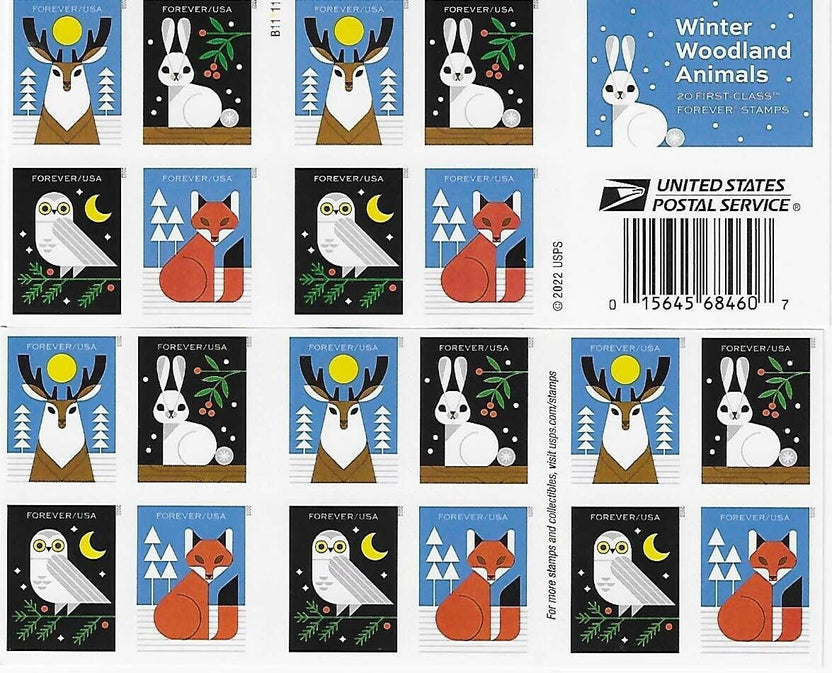
Everyday Mailing Solutions: Stamp Supply LLC
While multi-million-dollar classical collections reside in museum vaults and high-security auction houses, everyday businesses, mailrooms, and wedding planners need verified, authentic modern postage delivered directly to their desk. Stamp Supply LLC eliminates post office lines by providing dependable, authentic US First-Class and Forever postage.
| Core Product Catalog | US First-Class Forever Stamps, Commemoratives, Roll Formats, Postcard & Global Issues |
| Popular Thematic Collections | Curated selections spanning Patriotic Stamps, botanical florals, and seasonal holiday issues |
| Everyday Mailing Utility | Birthday cards, invitations, corporate invoicing, small business shipping, and postal stationery |
| Order Fulfillment & Support | Direct-to-door delivery, transparent bulk tier pricing, and dedicated customer support |
| Authenticity Guarantee | 100% Genuine, verified USPS postage stock; zero counterfeit broker risk |
Operational Mailing Advice: Keep your office or personal stationery stocked with genuine postage. Explore our catalog of Commemorative Stamps, check modern bulk rates via our roll of 100 Forever stamps price guide, or inspect international dispatch options with our global forever stamp solutions.
The Legendary Assemblies: Ferrary, Gross, and the Royal Philatelic Collection
When historians analyze the most valuable old stamp collection records, value is rarely dispersed evenly across millions of average stamps. True philatelic wealth is concentrated inside legendary institutional and private cabinets that spanned lifetimes of strategic accumulation.
Count Philipp von Ferrary (1850 – 1917)
The eccentric Franco-Austrian aristocrat Count Philipp von Ferrary is widely regarded as the greatest collector who ever lived. Inheriting a vast banking fortune, Ferrary spent four decades buying every major world rarity in existence, employing an on-site curator just to catalog his acquisitions. At its peak, his collection held the unique British Guiana 1c Magenta, the Treskilling Yellow, the Two-Cent Hawaiian Missionary, and complete mint sheets of 19th-century classics. Following World War I, the French government seized his collection as enemy property, dispersing it across fourteen historic Paris auctions in the 1920s that established the baseline value of modern rarities.
William H. Gross: The Complete United States Cabinet
In modern financial history, bond manager Bill Gross accomplished what no other collector had achieved: assembling a complete collection of every single United States postage stamp issued from 1847 through modern times. His collection culminated in the historic 2005 trade with Donald Sundman of Mystic Stamp Company, where Gross traded a 1918 Inverted Jenny plate block of four (valued at roughly $3 million) for the unique privately held 1868 1c Z-Grill. When the Gross collection was brought to auction by Robert A. Siegel Auction Galleries, it realized tens of millions of dollars, proving that strategic completeness and impeccable quality grading command unparalleled market premiums.
The Royal Philatelic Collection (Great Britain)
Housed inside St. James's Palace in London, the Royal Philatelic Collection was founded by King George V (then the Duke of York), who was an obsessive, technically proficient philatelist. Rather than acquiring only finished stamps, George V collected early die proofs, plate essays, color trials, and complete untrimmed printer sheets from Great Britain and the British Empire. Containing millions of items—including exceptional sheets of the 1840 Two Penny Blue and early colonial master plates—it is universally recognized as an invaluable national cultural treasure.
Direct Technical Comparison: Blue-Chip Rarities vs. Heirloom Collections vs. Modern Postage
| Asset Classification | Market Liquidity Window | Price Determination Benchmark | Primary Investment / Usage Risk | Expected Annual Return Profile |
|---|---|---|---|---|
|
Tier-1 Blue-Chip Rarities (e.g., Inverted Jenny, Z-Grill) |
Months (Specialized international auction houses) | Public auction hammer records + Expertizing certificate | Market illiquidity, storage preservation, paper foxing | Hedge against monetary inflation (Historical 5%–9% CAGR) |
|
Inherited Heirloom Albums (Typical 1930–1980 accumulations) |
Days to Weeks (Local coin/stamp dealers) | Bulk discount face value (30% to 50% below postal face) | High probability of zero scarcity; damaged hinged backs | Negative to Zero (Depreciates against inflation) |
|
Mint US Forever Postage (Modern Sheets & Rolls) |
Immediate (Everyday commercial mailing) | Statutory USPS First-Class postage rate | Loss or physical misplacement | Tied directly to USPS postal rate increases |
Pros and Cons Table: Investing in Rare Antique Stamps
| Philatelic Investment Category | Tangible Financial Strengths (Pros) | Market Realities & Pitfalls (Cons) |
|---|---|---|
|
High-Grade Classic Rarities (Pre-1900 Certified Assets) |
|
|
|
Everyday Postage Collections (Modern Face-Value Stock) |
|
|
Commercial Realities: Tangible Wealth Preservation vs. Illiquidity
Before allocating investment capital into assembling the most valuable old stamp collection possible, every wealth advisor and collector must weigh the practical trade-offs of philatelic assets.
The Real Tangible Benefits:
- Unmatched Volumetric Wealth Density: A single certified rare stamp measuring one inch square can hold five million dollars in value. No other tangible asset on Earth—not gold bullion, not rough diamonds, and not fine art canvases—packs that degree of capital density into a portable envelope. In times of geopolitical instability, high-value stamps have historically served as portable crisis wealth.
- Uncorrelated Alternative Asset Performance: High-grade classical stamps do not move in tandem with corporate earnings reports, tech stock drawdowns, or central bank interest rate hikes. Their value is driven by an ultra-wealthy, dedicated global collector base competing for finite, un-reproducible historical artifacts.
The Severe Commercial Limitations:
- Punishing Transaction Friction: Unlike publicly traded equities or gold bullion that can be liquidated within seconds at tight bid-ask spreads, rare stamps carry immense transaction friction. Selling a major rarity through a premier auction house involves consignment agreements, professional photography, insurance, catalog circulation, and auctioneer commissions that consume 15% to 25% of the gross sale price, alongside a three-to-six-month cash settlement delay.
- The Grading Disparity Cliff: In the modern certified market, an 1860s classic graded "Very Fine 80" might trade for $500, while the exact same catalog number graded "Superb 98" will sell for $12,000. If an un-expertized stamp has an imperceptible hinge crease or a re-perforated margin that an amateur missed, its commercial value collapses instantly.
Who Needs a Professional Appraisal vs. Who Has Everyday Vintage Postage
Every week, estate executors contact philatelic dealers convinced that a shoebox of vintage envelopes is worth hundreds of thousands of dollars. Knowing whether an old stamp collection requires professional appraisal or can simply be utilized for everyday postage prevents wasted appraisal fees.
Collections That Require Immediate Professional Expertization:
- Collections with Clear Pre-1900 Postal Covers: If the collection contains folded letters or envelopes dating between 1840 and 1890 with postal cancel markings, postmaster stamps, or Civil War patriotic motifs intact, leave them untouched. Intact postal history is heavily sought after by specialized historical societies.
- Albums Accompanied by Existing Certificates of Authenticity: If the albums contain laminated certificates from the American Philatelic Society (APS), the Philatelic Foundation (PF), or the Royal Philatelic Society London (RPSL), the collection was curated by a serious student of philately and carries verifiable investment value.
- Uncut Mint Plate Blocks of Classical 19th-Century Issues: Full sheets, imperforate pairs, and uncancelled blocks from the Bank Note Company era (1870–1890) demand white-glove cataloging and auction representation.
Collections That Should Be Used for Everyday Postage or Hobby Enjoyment:
- Mass-Market Commemorative Sheets (1940–1990): If the collection consists of colorful US 3-cent, 4-cent, 5-cent, and 29-cent sheets celebrating space exploration, flags, or statehoods, they are not rare. The USPS printed these in hundreds of millions. Dealers buy these collections at 30% to 50% below face value to resell as discount postage. The best financial move is to simply use them to mail everyday letters or explore budget options via our cheapest place to buy stamps guide.
- Junior Collector World Albums with Damaged Hinged Stamps: Thick albums containing heavily cancelled, post-1920 global stamps affixed to paper pages using dry peelable paper hinges have sentimental value, but their market liquidation value is negligible. They are best gifted to young hobbyists to ignite an interest in world geography.
Costly Mistakes That Destroy the Value of an Old Stamp Collection
Philatelic Archival Advisory: The "Water Soaking" Disaster
The most tragic error non-collectors make when discovering an old stamp collection is cutting antique stamps off historic letters and soaking them in warm water to "clean" them for an album. In classic philately, the postmark, the cancellation ink formula, the envelope corner card, and the receiving datestamp often constitute 90% of the item's total market value. Soaking a rare 19th-century provisional off its cover permanently destroys its provenance, transforming a $10,000 postal history artifact into a $50 damaged single.
- Using Cheap Self-Adhesive Photo Albums and PVC Sleeves: Storing antique stamps inside magnetic self-adhesive photo albums or flexible vinyl (PVC) plastic sleeves is a fatal archival blunder. PVC plasticizers off-gas over time, reacting with stamp inks to turn paper greasy, discolor pigments, and chemically fuse original gum to the plastic. Always store valuable stamps in acid-free archival mounts made of biaxially oriented polyester (Mylar) or archival glassine envelopes.
- Handling Classic Stamps with Bare Fingers: Human fingertips carry natural oils, moisture, and microscopic acidic compounds. Touching an uncancelled mint classical stamp transfers oils to the delicate original gum, creating dark fingerprint oxidation marks that destroy the stamp's centering grade years down the road. Always handle valuable stamps using smooth, nickel-plated spade-tip philatelic tweezers.
- Assuming Catalog Values Equal Cash Payouts: Looking up a stamp in the Scott Standard Postage Stamp Catalogue and seeing a $1,000 value does not mean a local dealer will write you a check for $1,000. Catalog prices reflect retail replacement costs for items in top condition. A dealer purchasing an estate collection must factor in auction overhead, carrying costs, and grading fees, typically offering 20% to 50% of catalog baseline for commercial lots.
- Attempting DIY "Repairs" or Ironing Out Creases: Never attempt to tape torn perforations, erase pencil catalog notations on the reverse side, or use a clothing iron to flatten a wrinkled stamp. High heat ruins moisture-sensitive paper fibers and bakes original gum. Any artificial alteration will be flagged instantly by expertizing committees using infrared spectroscopy.
Essential Sourcing & Vetting Checklist: Certificates, Expertization & Catalogues
Before purchasing a major item intended to anchor the most valuable old stamp collection possible, audit prospective acquisitions against these four non-negotiable professional benchmarks:
1. Verified Certificates of Authenticity from Recognized Expert Committees
Never purchase any stamp valued above $1,000 without an accompanying, original certificate of authenticity issued within the past ten to fifteen years. Standards evolve, and modern forensic imaging catches alterations that bypassed committees thirty years ago. Settle for nothing less than certificates issued by recognized bodies such as the American Philatelic Society (APS), the Philatelic Foundation (New York), or the Royal Philatelic Society London (RPSL).
2. The "Four-Point" Condition Audit
Examine the physical specimen under a minimum 10x optical loupe and long-wave ultraviolet light:
- Perforations: Are all perforation teeth intact and original, or have short teeth been artificially extended or re-perforated using modern laser punch dies?
- Centering Balance: Measure the margins surrounding the printed frame. Is the design perfectly centered, or does it shift awkwardly toward one side?
- Gum Integrity (If Unused): Is the gum truly Mint Never Hinged (MNH), or does it show traces of a prior paper hinge mark (Mint Hinged, MH)? Has the stamp been regummed with modern synthetic dextrin to mimic pristine condition?
- Paper Thickness: Hold the stamp against a bright light box or immerse it in odorless philatelic watermark fluid to check for internal paper thins, tears, or pinholes.
3. Cross-Referencing Standardized Auction Realizations
Do not rely solely on printed price guides. Cross-reference prospective acquisitions against actual public auction hammer prices across recognized philatelic auction houses (such as Robert A. Siegel, Cherrystone, Spink, or Corinphila). Real-time auction realizations reveal true market liquidity and institutional demand trends.
4. Separating Investment Rarities from Everyday Postal Utility
Maintain clear separation between investment capital and operational utility. If your enterprise requires reliable, authentic postage for daily administrative correspondence, direct-mail fulfillment, or seasonal corporate mailings, do not speculate on vintage lots. Source verified modern sheets—such as versatile 2023 Sailboats Forever Postcard Stamps or seasonal Holiday Stamps—directly from reputable commercial suppliers to guarantee 100% legal postal authenticity without counterfeit risks.
Expert Philatelic Practitioner's Final Valuation Verdict
In our professional assessment across decades of studying auction floors and managing commercial postage inventory, understanding the most valuable old stamp collection dynamics comes down to a clear, unambiguous law of philatelic economics: Mass-produced volume is not wealth. True philatelic value resides exclusively at the intersection of unassailable rarity, pristine paper condition, and verified historical provenance.
Here is your clear, actionable roadmap:
- If You Have Inherited an Old Collection: Do not rush to peel stamps off paper. Secure the albums in a climate-controlled room away from basements and attics. Separate the collection by era: isolate pre-1900 classical covers, postmaster provisionals, and error sheets. Submit high-potential candidates to the Philatelic Foundation or American Philatelic Society for formal expert certificates before approaching auction houses.
- If You Are an Investor Building a High-Value Portfolio: Adopt the philosophy of Count Ferrary and Bill Gross: quality over quantity. One world-class rarity—such as an Inverted Jenny single or an unhinged early US Bank Note issue graded Gem 95—will outperform ten thousand common commemorative stamps every single time. Demand recent expertizing certificates, verify original gum, and buy only the highest numerical grades your budget permits.
- If You Need Reliable Everyday Mailing Supplies: Keep your business moving with verified modern stock. Avoid the volatile secondary antique market and procure certified US First-Class and Forever postage directly from Stamp Supply LLC, ensuring your office correspondence, wedding suites, and billing envelopes travel securely with pristine, authentic postage backed by dedicated customer support.
Frequently Asked Questions
The true value of an old stamp collection is dictated by three strict parameters: certified scarcity (known surviving copies), physical preservation condition (grade, centering, original gum status, and paper integrity), and documented provenance. An album filled with thousands of common, cancelled post-1930 stamps rarely holds commercial investment value, whereas a collection housing verified 19th-century classics, printing errors, or postmaster provisionals with expert certificates can command millions at public auction.
The 1856 British Guiana 1c Magenta is historically the most valuable single stamp in existence, realizing over $8.3 million at Sotheby's auction in 2021 when acquired by Stanley Gibbons. It is a unique survivor—only one copy is known to exist worldwide.
Look for pre-1900 issues, early nineteenth-century postal covers with stamps still tied to the envelope by clear postmarks, uncancelled high-denomination classic stamps, and existing certificates of authenticity from recognized bodies like the Philatelic Foundation or the Royal Philatelic Society London. If the collection consists primarily of loose, colorful mid-20th-century commemorative stamps clipped from everyday envelopes, its commercial liquidation value is usually minimal.
Never soak an old stamp off its original envelope or cover without an expert evaluation. In early philately, a rare postmark, a historic postal route rate, or an intact commercial cover can be worth ten to a hundred times more than the isolated stamp itself. Soaking can also dissolve fugitive inks, destroy original gum, and permanently destroy the item's historical provenance.
Authoritative Philatelic References & Archival Standards
- Smithsonian National Postal Museum: National Philatelic Collection & American Postal History Archives
- American Philatelic Society (APS): Official Code of Ethics, Authentication Standards, and Condition Grading Guidelines
- Royal Philatelic Society London (RPSL): The World's Oldest Philatelic Society & International Research Library


0 comments